Tree Removal Metairie for Trees Interfering With Utility Access
@landenolrg964
October 27, 2026 · 14 min read

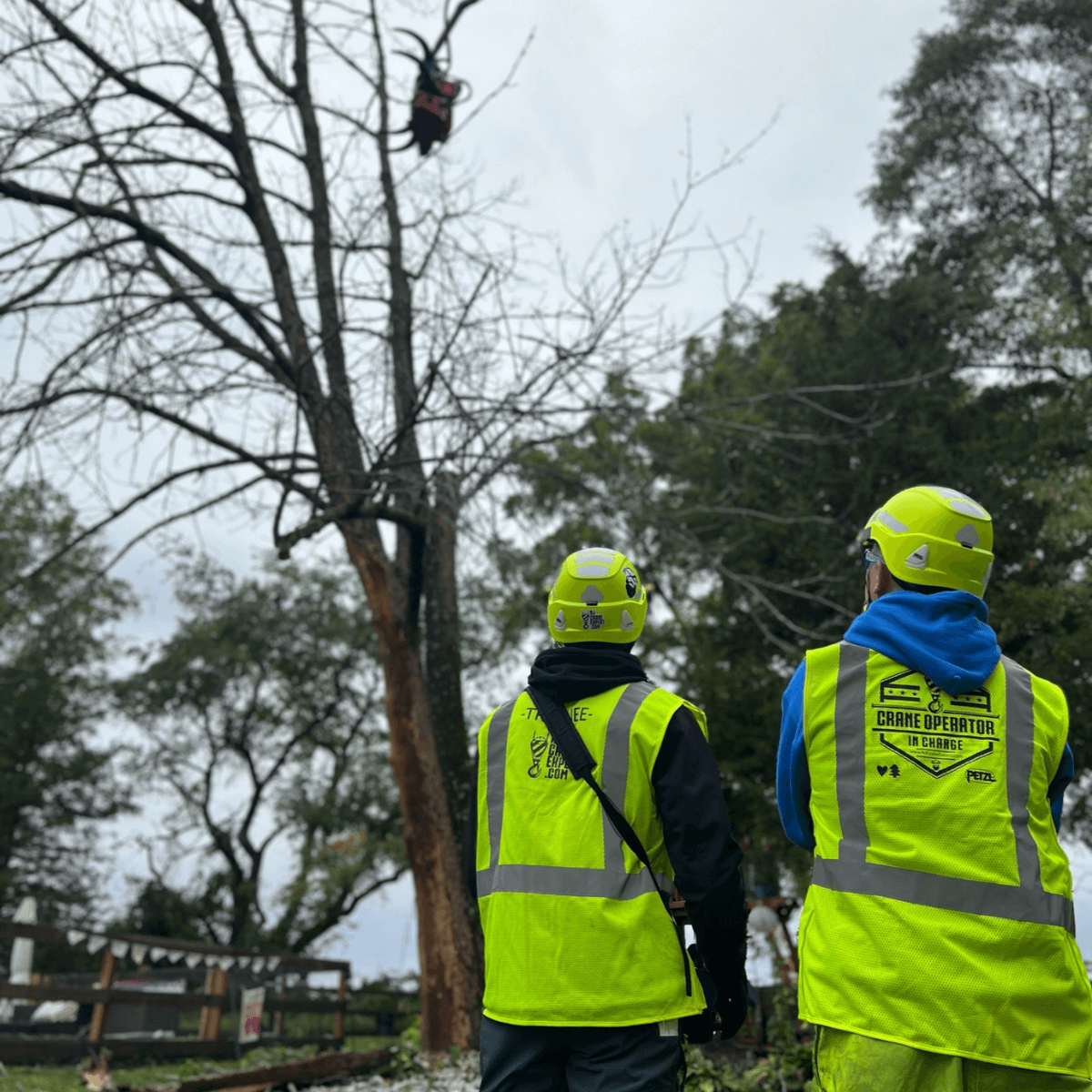

When a tree grows into the space utility crews need, the problem rarely stays small for long. What begins as a few limbs brushing service lines or crowding a transformer can turn into delayed repairs, power interruptions, blocked meter access, damaged equipment, or a preventable safety hazard. In Metairie, where mature oaks, fast-growing ornamentals, storm exposure, and tight residential lot lines often meet in the same front yard, these cases come up more often than many property owners expect.
Not every tree near a line or utility corridor needs to come down. In fact, many can be pruned and managed for years. But there are situations where removal is the safer, cleaner, and more economical choice, especially when the trunk position, growth habit, root spread, or structural condition makes repeat trimming a losing battle. That is where good judgment matters. The real question is not simply whether a tree is close to utilities. It is whether that tree can coexist with utility access without creating recurring risk.
Property owners searching for tree removal Metairie services are often dealing with exactly that issue. They are not looking to clear healthy shade for no reason. They are trying to solve a practical problem, one that affects safety, service reliability, and access for line workers or municipal crews.
Why utility access changes the equation
A tree in open lawn space presents one set of maintenance decisions. A tree standing beside a service drop, over a gas meter, near a sewer cleanout, or against an easement gate presents another. Utilities require working space. Crews need to approach equipment directly, open panels, inspect lines, and in many cases work quickly during bad weather or outages. Anything that limits movement or visibility raises the stakes.
In neighborhoods across Metairie, access issues often show up in ordinary ways. A crape myrtle planted too close to an electrical meter slowly envelopes the service area. A water oak leans into overhead lines after years of asymmetrical growth. A volunteer chinaberry sprouts beside a rear utility easement and, left alone, becomes a 30-foot obstacle in a zone where crews need truck and ladder access. None of these started as a crisis. They became one through time, growth, and neglect.
The cost of waiting is not limited to the tree itself. If a utility cannot safely reach equipment, service calls take longer. Emergency work can become more invasive. In some cases, crews will perform clearance cutting that is necessarily fast and functional rather than selective and aesthetic. Homeowners are often disappointed by the result, but from the utility side the priority is access and safety, not shaping a landscape specimen.
That is one reason proactive removal sometimes makes more sense than repeated reactive trimming. If a tree’s location guarantees ongoing interference, a planned removal usually causes less disruption than years of piecemeal cutting.
The kinds of interference that justify removal
There is a meaningful difference between a branch that can be shortened and a tree that is fundamentally in the wrong place. The distinction matters because proper tree care is not about removing every inconvenient tree. It is about recognizing when pruning still works and when it no longer does.
A tree may be a strong candidate for removal if the main trunk sits within the utility work zone, if the species regrows aggressively after pruning, if the canopy repeatedly reaches energized lines, or if roots are pushing into underground utility corridors. Structural defects also change the calculation. Once a tree has a split union, internal decay, severe lean, or major storm damage, keeping it near critical infrastructure becomes harder to justify.
In practical terms, some of the most common red flags include the following:
- The trunk blocks direct access to a meter, transformer, pole path, or easement entry.
- Repeated trimming has produced weak regrowth and the canopy quickly returns to the same conflict.
- The tree has visible defects, such as cavities, included bark, dead scaffold limbs, or fresh cracking.
- Roots are lifting pavement, crowding utility boxes, or threatening underground service lines.
- Storm exposure has already shifted the tree toward lines or equipment.
A homeowner may look at the leaves and think the tree still seems healthy, and sometimes that is true. Health alone is not the only issue. A vigorous tree can still be a poor fit for its location. Some of the worst utility conflicts involve trees that are growing exactly as their species tends to grow. They are not failing biologically. They are failing spatially.
Metairie’s landscape makes these conflicts common
Metairie has a mix of older lots with large established shade trees and newer planting choices squeezed into limited side yards, front setbacks, and fence lines. Add Gulf Coast weather, high winds, periodic saturation, and long growing seasons, and trees can gain size quickly. Utility infrastructure, meanwhile, is not always generous with clearance. That combination creates friction.
Live oaks deserve special mention because they are iconic and valuable, but they can become complicated near utilities. Their broad lateral spread means the trunk may sit a fair distance from the conflict while limbs still extend into access paths or over service lines. When the structure is strong, selective pruning often preserves the tree beautifully. When codominant stems, decay, root disruption, or storm loading enter the picture, preserving every oak at all costs stops being a responsible position.
Fast-growing species create another category of problem. Water oaks, sweetgums, hackberries, and volunteer trees that arrive uninvited often outpace the available space in just a few seasons. They may be inexpensive to ignore early and costly to deal with later. A 3-inch sapling behind a meter is a nuisance. The same tree at 14 inches, wedged between a fence and a service line, is a technical removal.
Local weather matters too. Saturated soils can weaken root anchorage. High winds can load asymmetrical canopies. Limbs that have been previously cut back from utility lines often sprout dense new shoots, and those attachments are usually weaker than tree removal metairie original branch architecture. That is why a tree can look full and green right up until a storm exposes how unstable that regrowth really is.
When pruning is enough, and when it is not
Good arboricultural judgment starts with asking whether the conflict can be solved without removing the tree. If selective pruning can restore safe clearance, preserve branch structure, and reduce the likelihood of repeat interference for a reasonable period, that is usually worth considering. A well-placed young tree with one encroaching limb should not be removed just because utilities are nearby.
But pruning has limits. Once more than a modest portion of the crown must be cut to maintain clearance, the tree often loses its form and sometimes its long-term stability. This is especially true when the side facing the utilities is repeatedly pared back while the opposite side continues growing. Over time, that imbalance can contribute to lean, stress, and poor weight distribution.
There is also the issue of pruning cycles. If a species rebounds aggressively and returns to the same conflict every year or two, the owner may spend more over ten years on repeated trimming than on one well-managed removal and replacement. That is not an argument for default removal. It is an argument for looking beyond the next invoice.
I have seen this play out in front yards where an ornamental tree was planted under overhead service because it looked small in a nursery container. Five years later it had doubled and then doubled again, filling the exact pocket the utility needed to keep open. The owner paid for shaping twice, then after a storm paid again for emergency clearance. By that point, the tree had a lopsided crown and weak uprights. Removal would have been cheaper and the property would have looked better if the decision had been made earlier.
Utility access is not just overhead lines
Most people picture branches touching wires, but some of the hardest access conflicts involve equipment at ground level. Electric meters, gas meters, shutoff valves, telecommunications boxes, drainage paths, and sewer access points all need open space around them. Crews may need to kneel, open enclosures, bring in handheld tools, or reposition ladders and service carts. Dense root flare plantings, low limbs, thorny shrubs, and clustered trunks can slow that work down substantially.
Underground utilities bring another layer of risk. Tree roots do not seek out pipes in a conscious sense, but they do follow moisture, cracks, and disturbed soil corridors. Large roots around old lines or utility trenches can complicate excavation and repair. If a tree is directly over a service route that has a known history of maintenance, the value of keeping it there drops fast.
This is one of the places where homeowners sometimes underestimate the issue. They think, reasonably enough, that if the canopy is trimmed back the problem is solved. But if the trunk or root plate occupies the exact footprint where a repair crew must dig or open an access point, the conflict remains. In those cases, pruning only addresses the visible part.
The removal process should fit the site
Removing a utility-conflict tree in a tight residential setting is not the same as dropping a tree into open land. Metairie properties often have fences, parked vehicles, patios, service wires, ornamental beds, neighboring structures, and narrow side access all within a few feet of the work zone. That means removals usually need to be sectional, controlled, and deliberate.
The safest crews begin with a site-specific assessment. They look at line location, service type, tree structure, decay indicators, lean, rigging points, drop zones, crane feasibility if needed, and whether utility coordination is necessary before any cutting begins. If energized conductors are involved, especially primary lines rather than household service drops, specialized clearance requirements come into play. No reputable company improvises around that.
Timing matters as well. A planned removal on a dry day with proper access is one thing. An urgent removal after wind damage is another. Once a tree has partially failed into a utility corridor, tension and compression in the wood can make cutting unpredictable. That is why homeowners should be cautious about assuming a storm-damaged tree can be handled like ordinary yard work.
The property owner also needs clarity on debris handling, stump treatment, and restoration. If the problem tree sat in the middle of a utility path, grinding the stump below grade may be preferable to leaving a raised obstacle. In other cases, especially close to buried lines, stump grinding depth and method should be discussed carefully. The right answer depends on what lies below and how the area will be used afterward.
What homeowners should ask before approving tree removal
Hiring the cheapest bid for a utility-adjacent tree is one of those decisions that can look frugal for about a day. Then the damage shows up. A broken fence panel, bark gouges on the retained tree beside it, ruts across a drainage line, or worse, an unsafe cut near energized service.
A better approach is to ask practical questions that reveal how the contractor thinks. The answers tend to separate experienced crews from opportunists very quickly.
- What exactly is interfering with access, the canopy, trunk, roots, or all three?
- Can pruning solve this safely for several years, or is removal the more durable fix?
- Will utility coordination be needed before work begins?
- How will the tree be dismantled without damaging nearby structures or service equipment?
- What happens to the stump and debris after removal?
Notice that none of those questions revolve around a generic promise to “take care of it.” You want specifics. A contractor who can explain the conflict in plain terms is usually a contractor who has seen the problem before.
Common edge cases that deserve careful judgment
Some trees sit on the line between preservation and removal. These are the cases where a blanket rule fails.
One common edge case is the healthy mature tree with one major limb over a service area. If the species tolerates reduction pruning, if the structure is otherwise solid, and if the clearance can be maintained without disfiguring the tree, removal may be unnecessary. Another is the younger tree planted badly but still small enough to transplant or remove with minimal disruption. In that situation, acting early preserves future options.
A more difficult case is the historic shade tree near utilities that also adds clear property value and neighborhood character. Owners are understandably reluctant to lose those trees. Sometimes cabling, reduction, and targeted pruning buy useful time. Sometimes they do not. If the base is compromised or repeated line conflicts have already produced poor architecture, sentiment should not obscure risk.
Then there is the tree that technically could remain, but only at the cost of harsh utility clearance cuts every cycle. Property owners often dislike this outcome more than they expect. The tree survives, but it no longer looks balanced or intentional. In those cases, a planned removal followed by planting a better-suited species away from the conflict can improve the yard and reduce long-term maintenance.
Replanting matters more than most people think
A removal done for utility access does not have to leave the landscape barren. In fact, the best outcomes usually include a replacement plan. The key is matching species and placement to the actual space available, not the space you wish you had.
Small to medium trees with mature dimensions appropriate for setbacks, meter zones, and overhead clearances are often the better long-term investment. The exact species choice depends on soil conditions, drainage, light, and the owner’s priorities for shade, flowering, leaf drop, and storm resilience. What matters most is avoiding a repeat of the original mistake.
A tree planted ten or fifteen feet farther from a utility zone can change the whole maintenance picture. So can choosing a species with a slower growth rate and a more predictable mature form. Good planting decisions are quiet savings. They reduce future trimming, lower storm exposure, and spare the homeowner from making the same removal call a decade later.
Cost, value, and the hidden expense of delay
Tree removal near utilities often costs more than standard removal because the work is slower and more technical. There may be limited drop zones, rigging requirements, utility coordination, traffic issues, or restricted equipment access. Homeowners sometimes recoil at that number, especially if the tree still appears green and “alive.”
What they should compare it against is the full cost of not acting. Repeat pruning every couple of years, emergency response after a storm, service disruptions, damage to utility equipment, or secondary property damage can surpass planned removal surprisingly quickly. Even when insurance enters the picture, deductibles and exclusions can leave owners absorbing more than they expected.
There is also a value question beyond direct cost. A clear utility access route means faster service when something fails. It means less likelihood of harsh emergency cutting. It means fewer surprises during storms. Those are not glamorous benefits, but they are real, and in residential property management, reliability has value.
For anyone evaluating tree removal Metairie options, the smartest path is usually a site visit with someone who understands both tree biology and the practical demands of utility clearance. The answer should not be driven by fear, nor by attachment alone. It should be driven by fit. Some trees fit their location for decades with modest care. Others never really fit at all.
When a tree interferes with utility access, removal is not automatically the right answer, but neither is indefinite delay. The right call comes from reading the site honestly: how the tree is growing, what it obstructs, how often it must be cut back, what risks storms amplify, and whether preserving it still makes functional sense. In many Metairie yards, that honest reading leads to a straightforward conclusion. The tree has outgrown the space, the conflict will keep returning, and a careful removal is the most responsible step forward.
A Perfect Cut Tree Service
4725 Shores Dr, Metairie, LA 70006
+1 504-732-0779
FAQ About tree removal metairie
What is the average cost of tree removal in my area?
There is no single price that fits every tree. Size, condition, access, nearby structures, equipment, debris hauling and stump work affect the estimate. Request a written, site-specific quote that identifies what is included.
Who will remove trees for free?
Free removal is not generally available for ordinary private-property tree work. Utilities or public agencies may handle trees within their responsibilities. Confirm eligibility directly and do not assume that an offer or assistance program covers your tree.
Can I just cut down a tree in my yard?
Check ownership, location and local requirements first. Jefferson Parish requires a permit for removal of qualifying vegetation in the public right-of-way, and additional protections may apply in designated areas. Ask the parish about your property and have a qualified tree professional assess the work.